
Research webinar · Nexed Insight x UNICON
AI transformation is a business challenge, not a technology one
On June 11, UNICON members joined the Nexed Insight team to discuss our latest joint report, Executive Learning at the Speed of Change, the second major research collaboration between Nexed Insight and UNICON. Daniel Chadwick presented the findings, with Eric Bergemann of MIT Sloan, co-chair of the UNICON Research Committee, moderating.
The study moved closer to the frontline of transformation, drawing on interviews with senior transformation and technology leaders alongside survey data from 180 organizations. The headline for our members is an encouraging one: the capabilities organizations now need most are the ones business schools are built to deliver.
The research
Executive Learning at the Speed of Change
How AI is reshaping demand, delivery, and the learning partnership. The full report goes far deeper than this recap, including the six tensions facing business schools.
Download the reportThe speakers

Daniel Chadwick
Co-founder, Nexed Insight · Director, IEDP
With over a decade of experience working closely with top business schools worldwide, Daniel is a leading authority in marketing and positioning business education brands and products. In his role as Director at IEDP he advises institutions, helping them differentiate, innovate, and expand their impact. Daniel's work spans market research, thought leadership, brand development, in-depth faculty interviews, report writing, and data storytelling. A specialist in marketing strategy and writing, Daniel brings a unique perspective to communicating complex ideas effectively. Committed to helping make business education ever more impactful, he co-founded Nexed Insight to foster more relevant, learner- and client-centric offerings through data-driven intelligence and strategic foresight. He also authored UNICON's post-conference report for the 2026 Directors' Conference.
Connect on LinkedIn ›
Eric Bergemann
Managing Director, Americas & Industry Programs, MIT Sloan · UNICON Board Member
Eric currently serves on the UNICON Board of Directors and co-chairs the Research Committee. He joined the Board in 2020, served as co-chair of the Benchmarking and Research Committees and as UNICON Board Chair in 2024-2025, and was off-board co-chair of Research from 2014-2016 and Benchmarking from 2016-2020. He has been a presenter and facilitator at UNICON Conferences since 2008, and brings extensive experience in business improvement methods, operations, administration, and information systems. He is a graduate of Tufts University.
Connect on LinkedIn ›What organizations are asking for
The capabilities in demand are what business schools build
When organizations describe what they need to unlock AI transformation, the answer is strategic and human, not narrowly technical. Strategic thinking tops the list and technical AI skills rank last. Those priorities line up closely with the capabilities leaders see business schools as best equipped to develop.
Business schools are strongly aligned with many of the capabilities organizations now prioritize most
Four of the five most important capabilities for AI transformation are also among the top five capabilities organizations believe business schools are best equipped to develop.
% selecting each capability among their top three responses
“It's about bringing people together from all levels. Now you can clearly see the network, the meta view.”
— CLO, United States Air Force
The provider landscape
Business schools have room to grow
AI capability building is sourced from many directions at once. Technology partners lead the field, but Nexed Insight found they tend to be strong on tools and application and lighter on the broader, more strategic issues. Universities and business schools currently hold the smallest share, at 17.2%, which the research frames as the scale of the opportunity: most organizations are not yet working with business schools in this area, and those who do tended to speak positively about the experience.
Which providers organizations use to build AI capability (% selecting, multiple choice)
From optimization to transformation
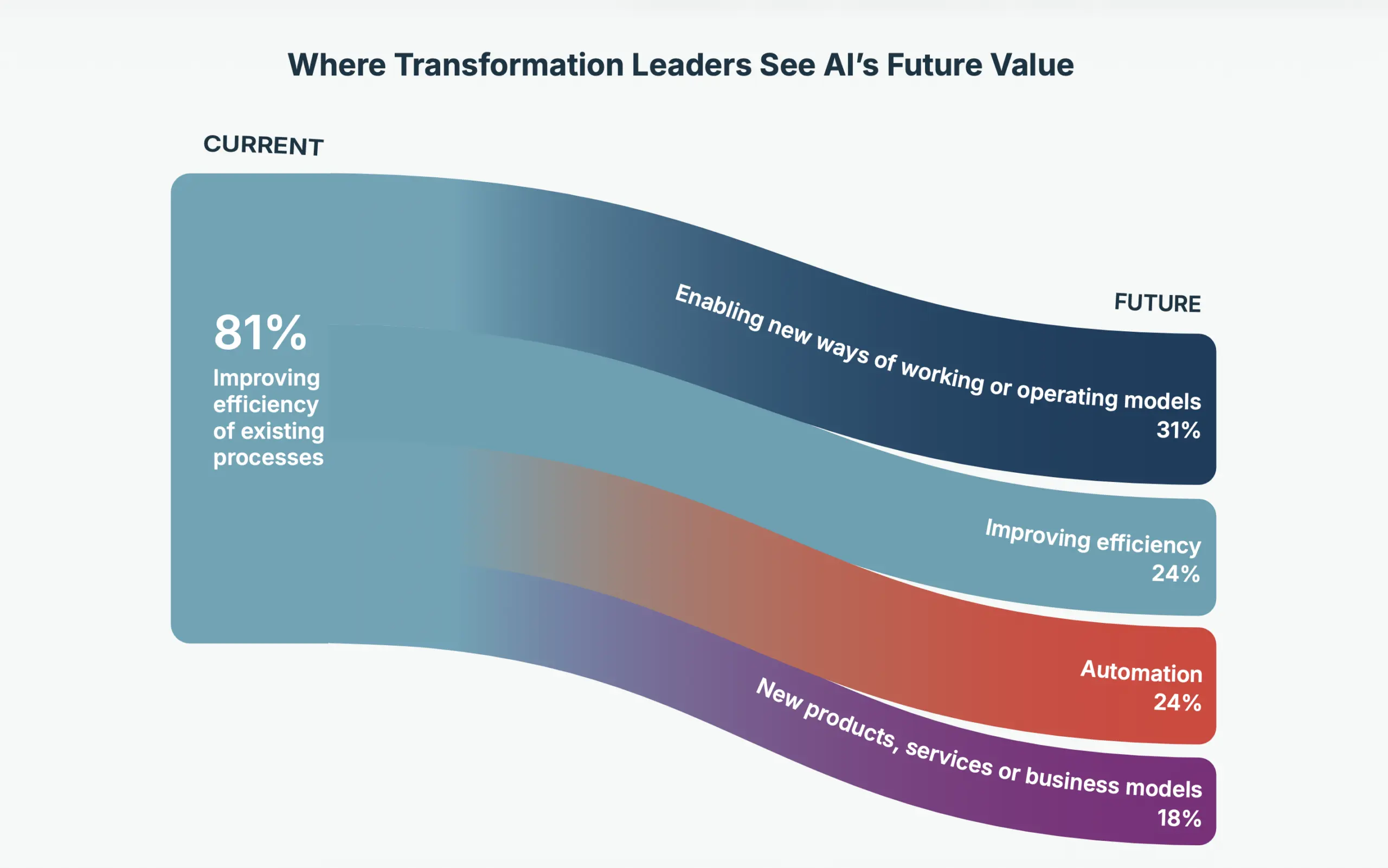
Leaders are clear about the real challenge
Organizations are good at using AI to optimize what they already do. The bigger prize is applying it across the whole business and rethinking how work, data, and decisions connect. The challenge leaders describe is strategic, not technical, which is familiar territory for business schools.
“The challenge is moving from functional optimization to cognitive systems thinking.”
— Former Chief Transformation Officer, FedEx, United States
The literacy gap
AI literacy is the hardest gap to close
AI literacy was named the single biggest capability gap in the study. The difficulty is not becoming literate once. It is staying literate in a subject that shifts daily, which calls for the kind of sustained, evolving capability building business schools are equipped to design.
Where the opening is
Current learning is under pressure
The research found real dissatisfaction with current provision, and it runs across the whole provider mix rather than one corner of it. Just 15% say their current learning needs are being met very well. The clearer signal is what leaders want instead, which is more adaptive.
Strong appetite for more adaptive learning models
The experimentation gap
Everyone wants hands-on practice, few have space for it
The widest gap in the whole study sits here. Leaders know they need to get hands-on with AI, yet rarely have room to practice on non-critical tasks. That is a clear opening for business schools to provide.
A healthier partnership
Clients want to build alongside their partners
The partnership findings were among the most optimistic. Organizations recognize their learning partners are figuring this out as they go, and they are open to it. The call is not for perfectly stress-tested programs, but for learning that evolves with the challenge.
The takeaway
Built for executive education
AI is best understood not as a technology challenge but as an all-encompassing business challenge. That reframing plays directly to the strengths of executive education: strategy, systems thinking, cross-functional leadership, and the ability to convene people around hard problems. The demand is real, it is growing, and it is pointed our way.
Continue the conversation
The Nexed Insight team will explore further angles from the research in person at the Annual Workshop at MIT Sloan in July, including the tensions and opportunities for executive education, with more discussion to come at the Team Development Conference in November.
Save the date

November 18–20, 2026
UNICON Team Development Conference, TDC 2026 | Arizona State University
Save the date for the UNICON Team Development Conference (TDC 2026), hosted by Arizona State University in Phoenix, AZ, November 18–20, 2026. Join executive education leaders from around the world for three days of connection, innovation, and professional growth. Registration details coming soon.