Share your conference feedback
Your insights help us continue to improve and deliver meaningful experiences. Please take a few moments to share your feedback about #UNICONDirectors:
Complete the Conference Survey →
Conference highlights
See key highlights below, and look up for a full detailed wrap up from IEDP over the next few weeks:
Day 1 — Tuesday, April 14
Strategy for Today
The conference opened with
Melanie Weaver Barnett (UNICON Executive Director) and
Shalini Bhatia (UNICON Board Chair, Stanford GSB) setting the tone for three days of candid, high-stakes conversation.
AI as a present-tense reality
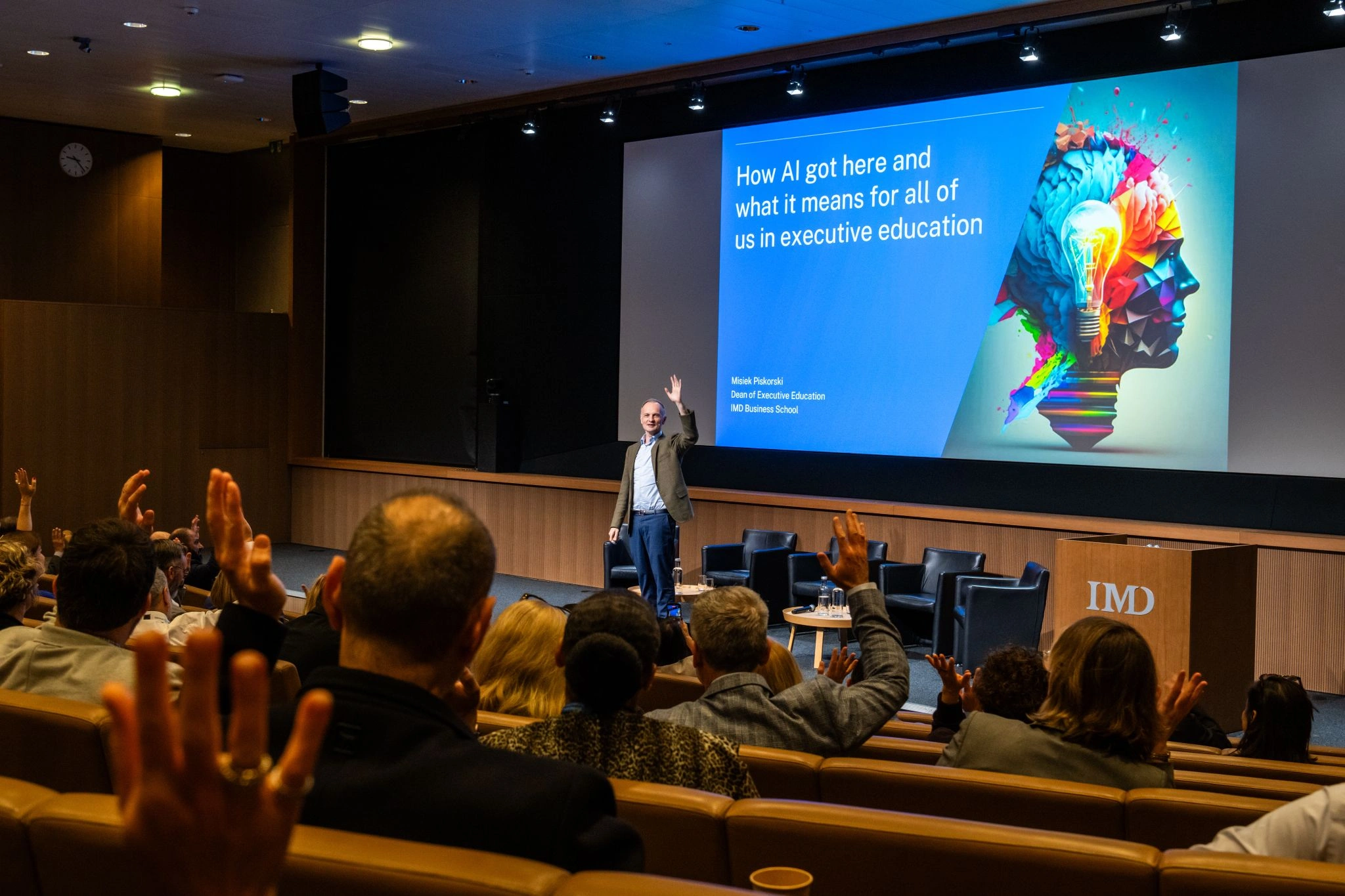
Misiek Piskorski, Dean of Executive Education, IMD
Dean Misiek Piskorski skipped the future-gazing and went straight to operations — live tool demonstrations, and a diagnostic of institutional AI readiness across four dimensions:
- Program design
- Delivery
- Operations
- Research and content
The gap between institutions experimenting with AI and those that have integrated it into their core was impossible to ignore.
What clients have quietly stopped buying
Moderated by Anna Dunand, Chief Business Development Officer, IMD
The clients on stage both lauded business schools for driving innovative thinking leaders need to create their organizations’ futures, and challenged them to move more quickly and be more responsive to clients’ fast-evolving needs.
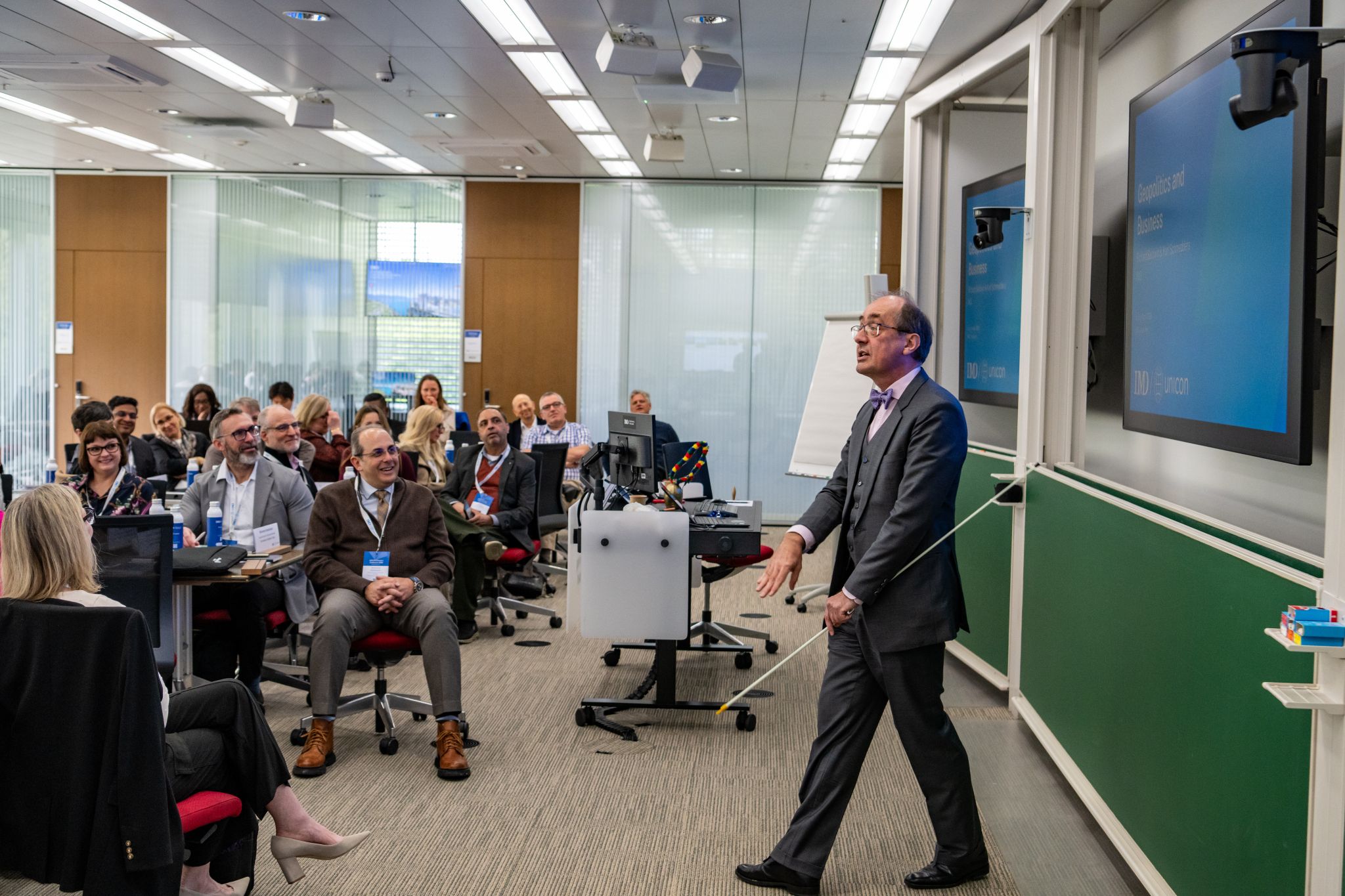
The geopolitical map has been redrawn
Karl Schmedders and Richard Baldwin, Professors of Finance and International Economics, IMD
US-China decoupling, hardening regional blocs, and the striking fact that 87% of global import demand now sits outside the United States. For many in the room, this reframed not just market strategy — but curriculum.
Speed Consulting: peer advice that actually fits
Facilitated by Anna Dunand
Each participant arrived with their hardest current challenge. Three rapid rounds of structured peer exchange — colleagues who understood the context, had faced similar pressures, and could offer ideas that actually worked in practice.
Evening: Dinner at the Olympic Museum
A private evening on the shores of Lake Geneva and a cocktail dinner on the lakeside terrace, and a keynote on high performance under pressure.
Day 2 — Wednesday, April 15
Strategy for the Future
Two futures, one room
Knut Haanaes, Professor of Strategy, Lundin Chair of Sustainability, IMD
One group explained why executive education had its best year ever in 2035; the other explained why it no longer existed. The result was a concrete, visual map of the decisions that separate survival from irrelevance: built from the collective instincts of the people who run these organizations.
Where the demand is actually growing
Mark Greeven, Dean of Asia, Professor of Management Innovation, IMD
A data-driven scan of underserved and fast-growing markets:
- India — fastest-growing market globally
- Middle East — sovereign wealth fund investment driving demand
- Africa — most underserved continent
- Southeast Asia — battleground between Western and Chinese management models
- Latin America — significant and often overlooked opportunity
Participants then mapped their own portfolios against this landscape and identified one blue ocean market for the next 24 months.
Are your organizations actually ready?
IMD Strategic Talent Solutions
The IMD Strategic Talent Solutions team turned the lens inward — applying their assessment framework to participants’ own profiles and their institutions. A structured diagnostic of readiness across the capabilities that will matter most over the next three to five years.
Evening: Excursion to Gruyères
The group traded the conference room for a medieval hilltop town — a visit to Maison Cailler (the oldest chocolate factory in Switzerland), followed by dinner at Le Chalet de Gruyères.
Day 3 — Thursday, April 16
Managing the Enterprise
The final day turned from strategy to execution — and to the human reality of leading organizations through sustained disruption.
The partnership paradox
Led by Anna Dunand
Peer schools are simultaneously your best potential collaborators and your most direct competitors for the same clients. The session pushed past the usual talking points to examine what actually makes these partnerships work – and what the industry tends not to say about why they don’t.
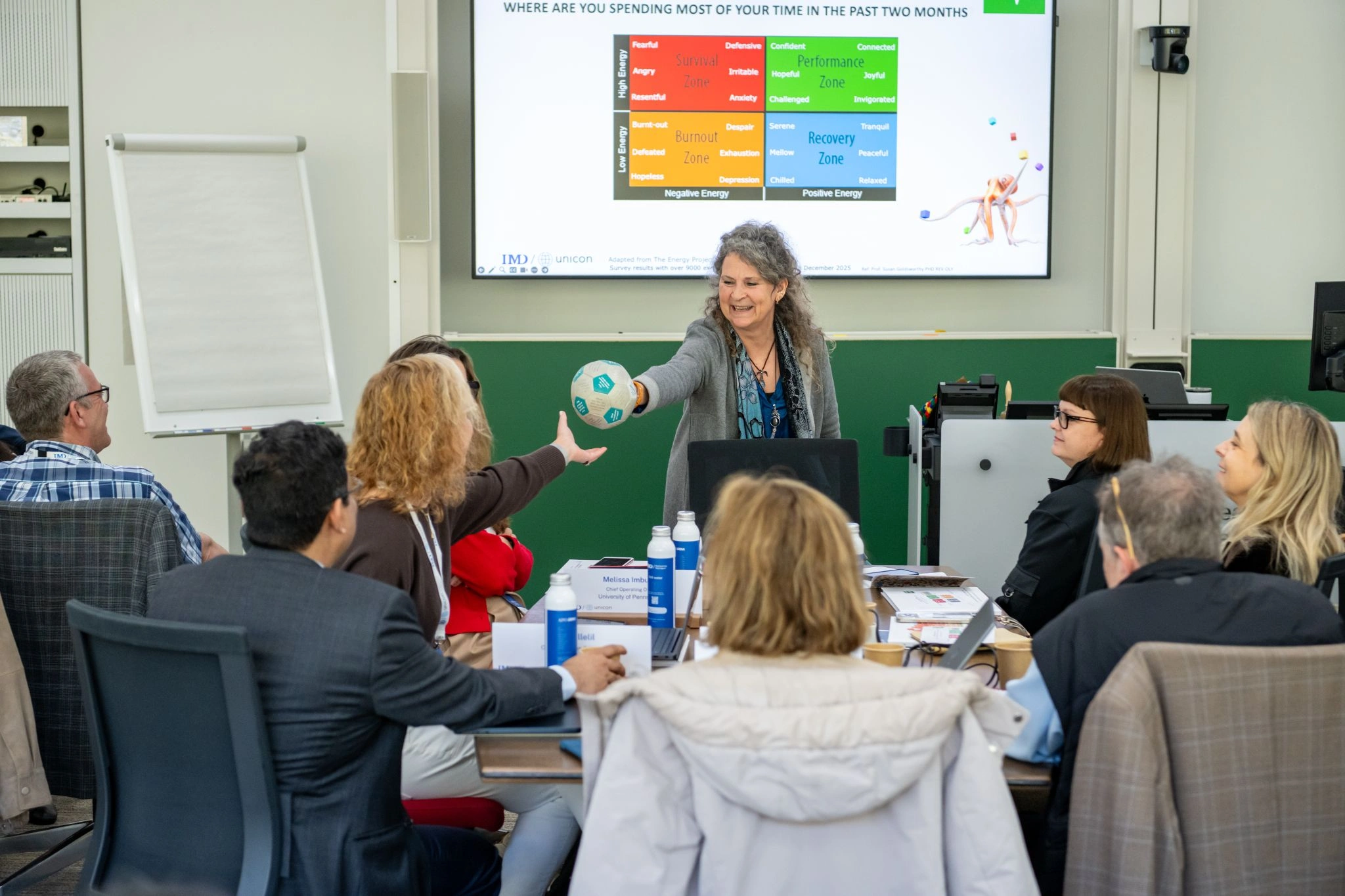
Personal resilience as a strategic asset
Susan Goldsworthy, Affiliate Professor of Leadership, Communications, and Organizational Change, IMD
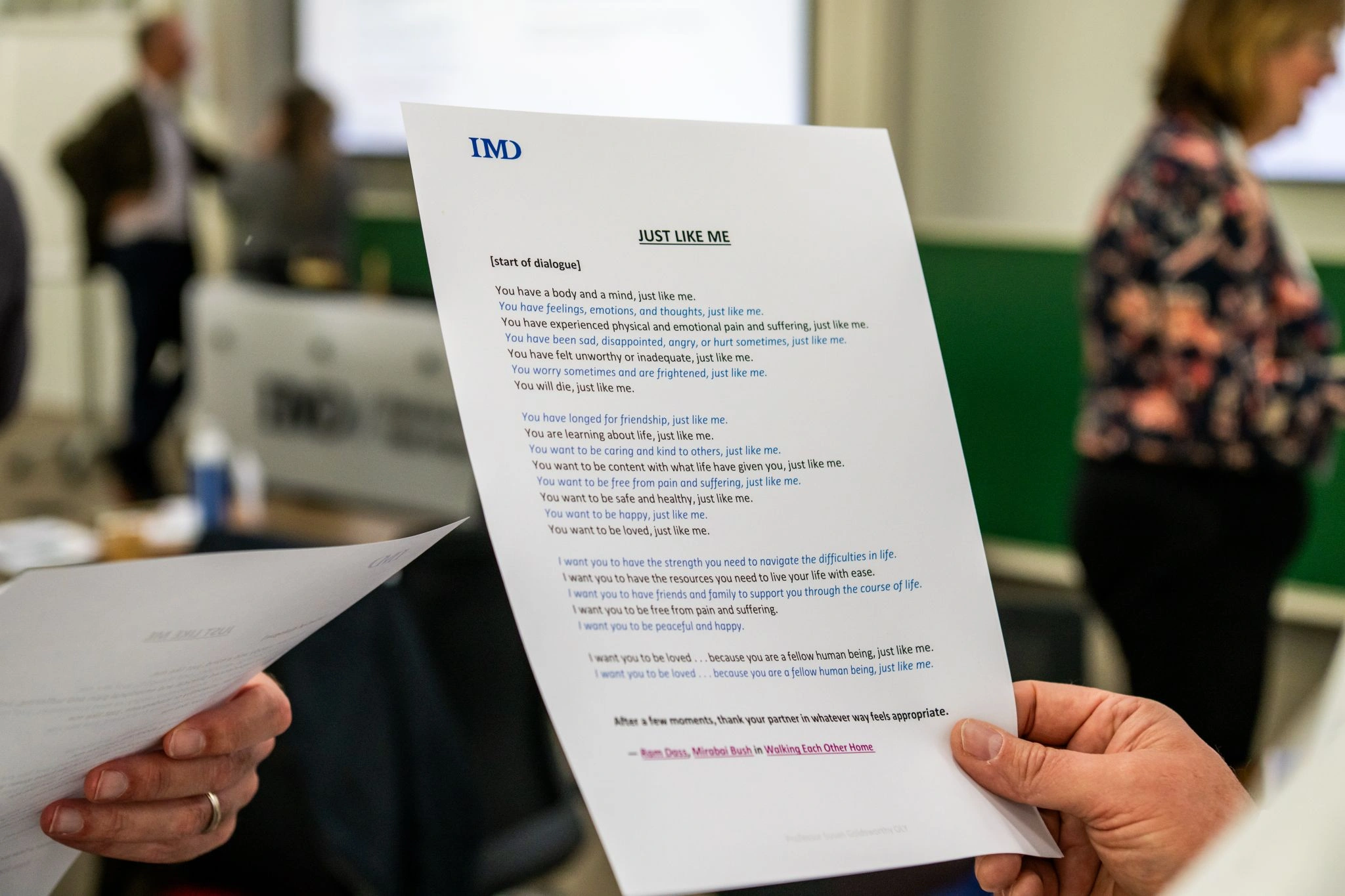
An Olympic finalist, Professor Goldsworthy reframed resilience not as a wellness topic but as a leadership one. Drawing on neuroscience, sport, and organizational research, she explored what it takes to move from survival mode to a place where creativity and collaboration become possible again. One of the most quietly powerful sessions of the three days.
Building organizations that don’t depend on heroes
Katharina Lange, Affiliate Professor of Leadership, IMD
In this session with former UNICON Board member Professor Katharina Lange, participants looked at the wider team impact, and completed a rapid organizational health check and committed to one concrete structural change within 90 days.
Closing: Commitments and Community
Misiek Piskorski, Anna Dunand, and Melanie Weaver Barnett
Three days of work brought together — before handing the baton to MIT Sloan for a first look at the UNICON Annual Workshop, July 2026.